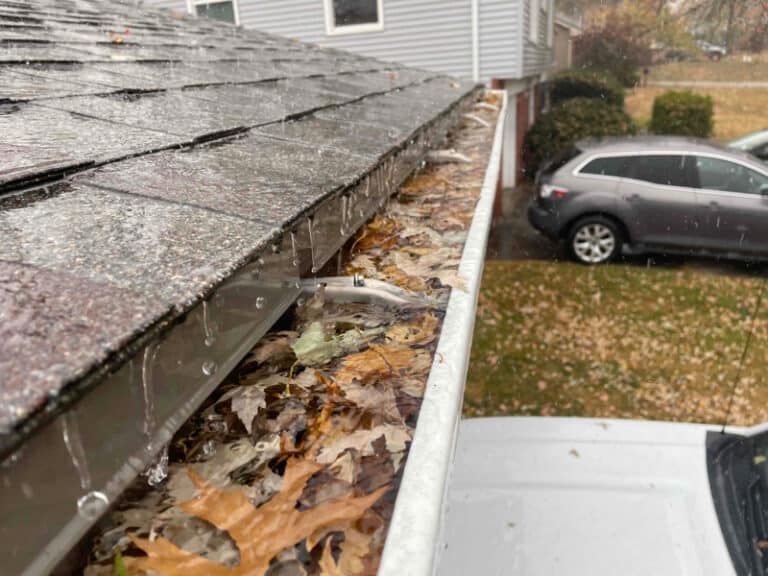
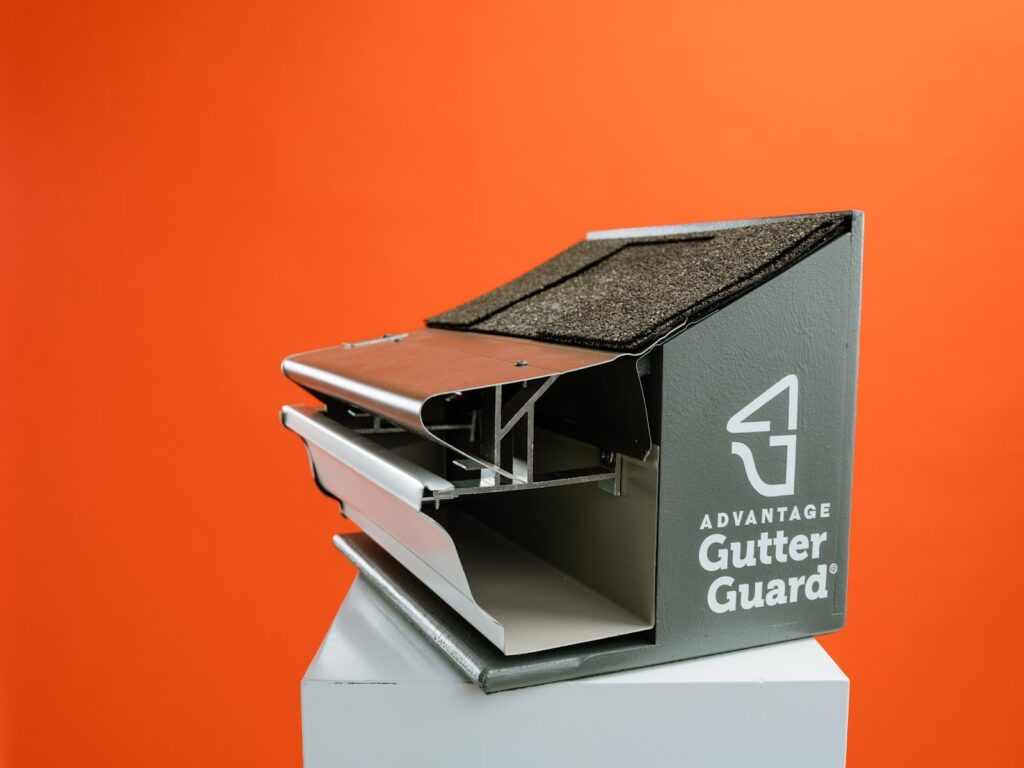
If you’ve ever climbed a ladder to pull out wet leaves, twigs, or shingle grit, you already know something important: gutter cleaning is inconvenient and risky. What many homeowners don’t realize is that clogged gutters can quietly cause water damage around the roofline, foundation, and landscaping.
That’s why gutter guards exist — to keep debris out, help water flow where it should, and reduce the amount of maintenance needed each year.
But not all gutter guards are built the same. Some are temporary fixes, while others are engineered as long-term protection systems. Professionally designed surface-tension systems — such as Advantage Gutter Guard® — are built to manage heavy rainfall while allowing debris to shed off the edge rather than collect inside the gutter.
With so many types of gutter guards out there, how do you know which one will actually work for your home?
This guide breaks down the most common options, their pros and cons, and what to consider before choosing a system.
Gutter Guard Options- Quick Summary
| Type | Cost $/FT | Lifespan | Maint | Best For |
| Professional Solid Gutter Guard with /without Gutters | $25-$65 | 25+ Years | Very Low | Long Term Homeowners |
| Foam | $1.50-$2 | 1-2 Years | High | Short-term results/budget-friendly |
| Professional Micro Mesh | $25-$45 | 20 Years | High | Light Debris |
| Brush | $4-$7 | 3-5 Years | High | Easy-Access to Gutters |
| DIY Screen / Mesh | $2-$9 | 1-5 Years | Very High | Short-term results/budget-friendly |
| DIY Surface Tension | $1-$12 | 1-5 Years | Very High | Short-term results/budget-friendly |
The Main Types of Gutter Guards
While designs vary from brand to brand, most products fall into five categories:
- Screen and mesh gutter guards
- Micro-mesh gutter guards
- Foam inserts
- Brush gutter guards
- Reverse-curve/surface-tension gutter guards (DIY and professional versions)
Let’s take a closer look at each type and what homeowners should expect.
Screen & Mesh Gutter Guards (DIY-Friendly)
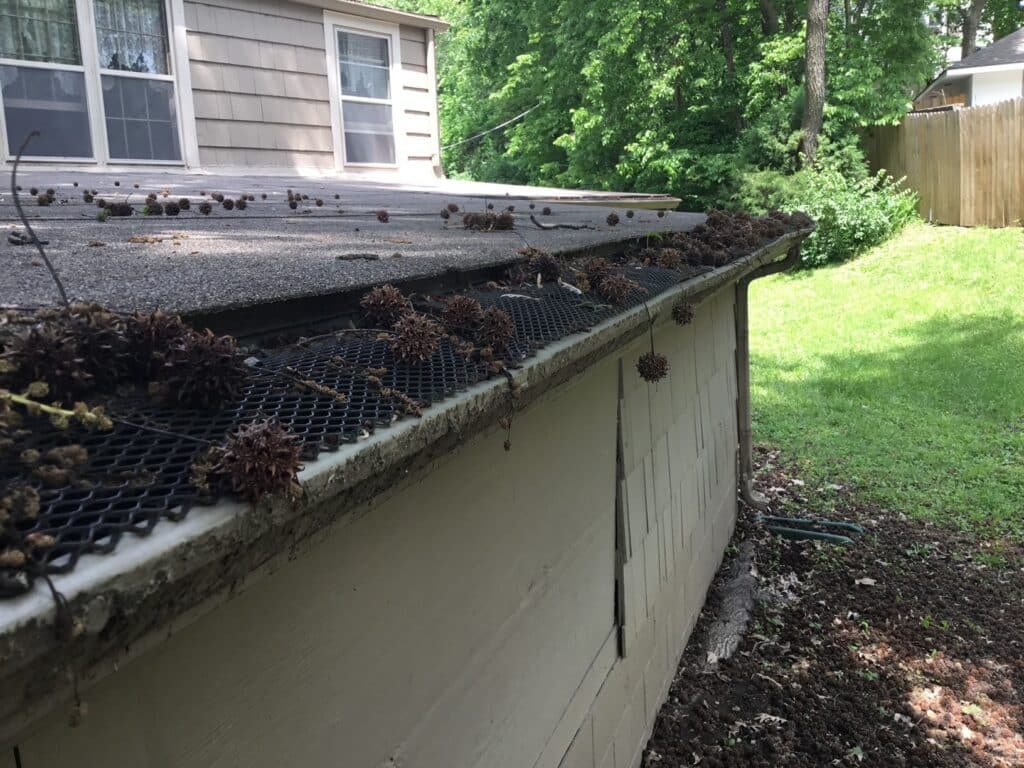
What They Are
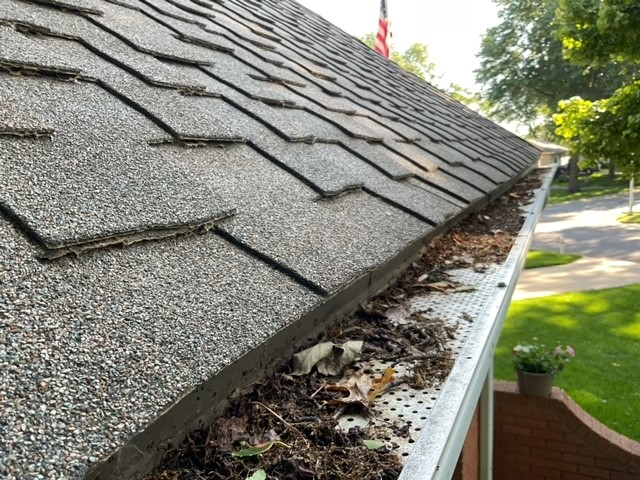
Thin, perforated screens or basic mesh panels are installed on top of the gutter to block larger debris.
Pros
- Budget-friendly
- Simple to install
- Readily available at home improvement stores
Cons
- Shorter lifespan
- Small debris collects on top and inside the gutter
- Still requires seasonal hands-on maintenance
Best For
Homes with minimal surrounding trees or light seasonal debris.
Micro-Mesh Gutter Guards (DIY & Professional)
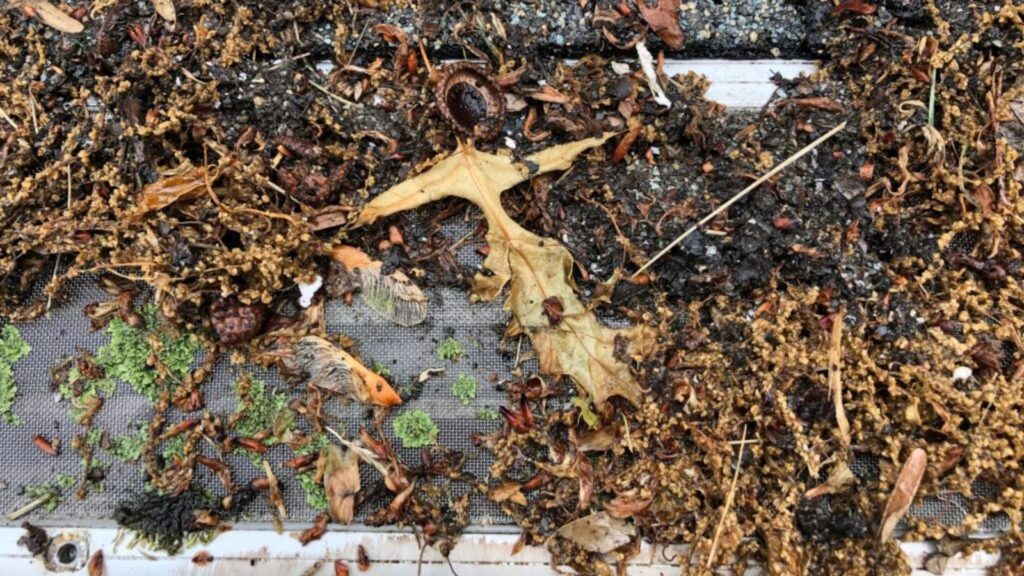
What They Are
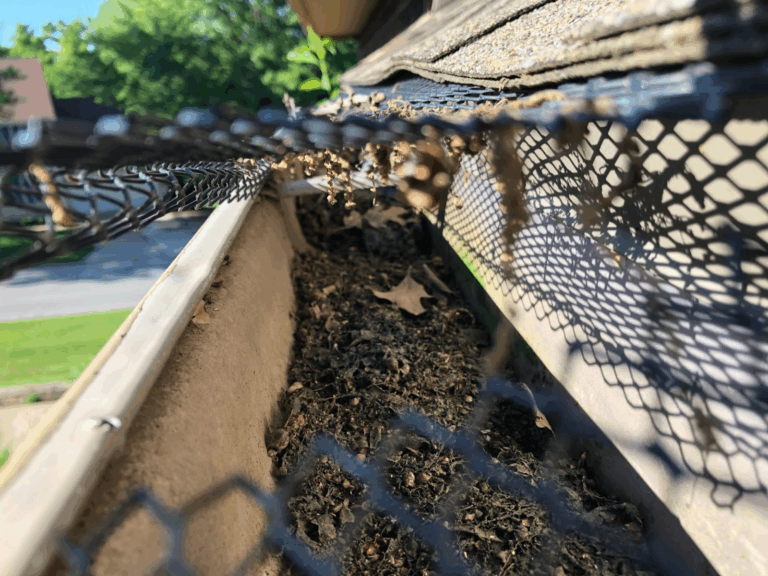
Screens with ultra-fine openings designed to block small debris like pine needles and shingle grit.
Pros
- Highly effective at filtering fine debris from entering gutter itself
- When properly and regularly cleaned and maintained, allows for heavy water flow
Cons
- Debris settles on top and needs to be cleaned off to ensure proper function
- Performance varies widely based on regularity of maintenance
- Price can vary widely, but functionality and performance is the same
- Snow and ice can block the fine holes in the filter. When snow accumulates and refreezes, water may not pass through properly.
- Limited snow-load durability without structural reinforcement.
Best For
Homeowners with low and accessible gutters, allowing for regular maintenance.
Foam Inserts
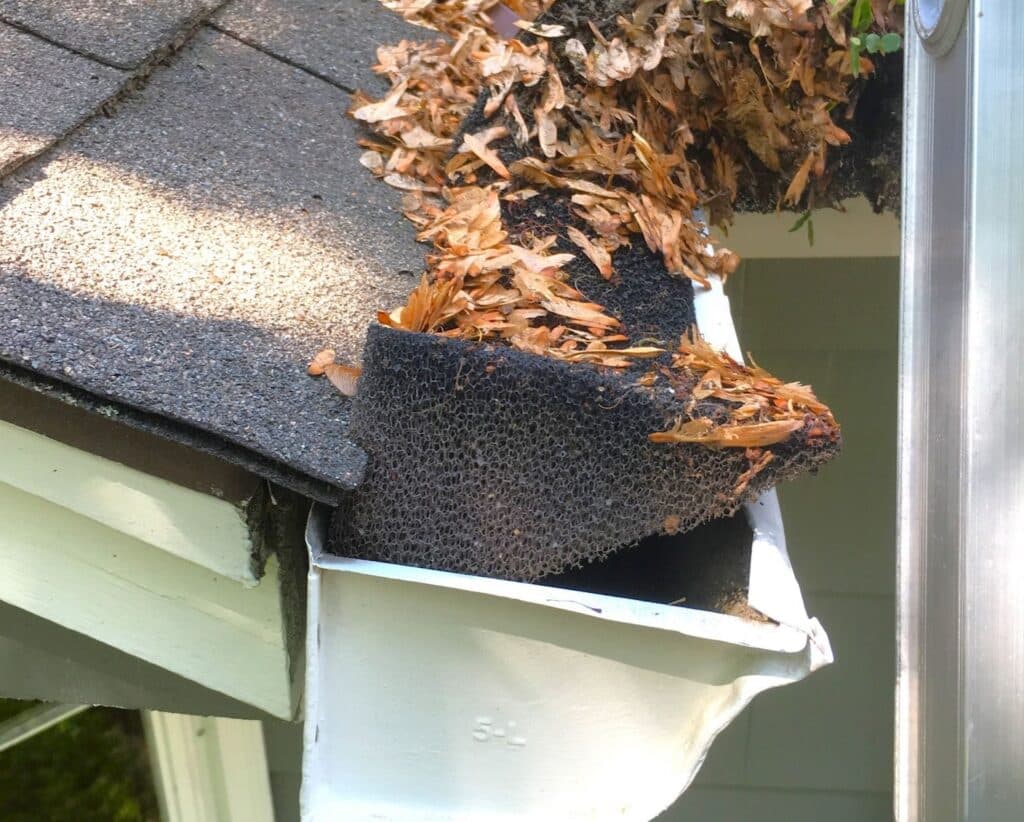
What They Are
Porous foam pieces placed inside the gutter to block debris while water passes through.
Pros
- Low initial cost
- Easy to install or remove
Cons
- Traps debris and moisture
- Breaks down over time
- May develop mold or mildew
- Requires regular replacement
- Lowers gutter capacity
Best For
Temporary or budget-driven solutions—not long-term protection.
Brush Gutter Guards
What They Are
Large bottle-brush–style inserts that sit inside the gutter, catching debris while letting water pass.
Pros
- Easy to remove and clean
- Affordable
Cons
- Bristles collect and hold fine debris
- Requires frequent maintenance
- Not ideal for areas with heavy leaf fall
Best For
Homes where gutters are easily accessible for routine cleanouts.
Professionally Installed Solid-Hood Systems
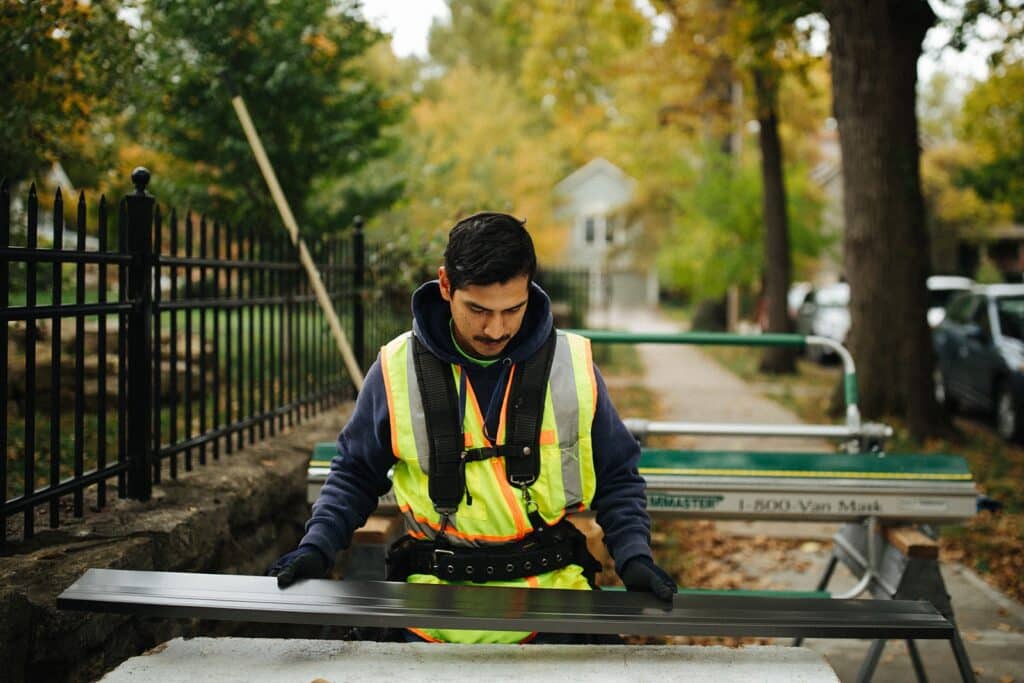
Pros
- Lasts for decades
- Handles heavy rain effectively
- Minimal ongoing maintenance
Cons
- Higher upfront investment
- DIY reverse curve or DIY surface tension products are NOT RECOMMENDED. Surface tension gutter guards must be installed correctly to work as intended.
Best For
Homeowners looking for a long-term, low-maintenance solution.
What Makes a Solid Hood System Work Well?
Not all solid-surface systems are engineered the same way. The performance of a surface-tension guard depends on:
- Proper pitch alignment with the roofline
- A precisely engineered front edge that manages water flow
- Structural strength to handle heavy rain and seasonal weather
- Professional installation to prevent overshooting or backflow
For example, systems like Advantage Gutter Guard® are designed around the principle of surface tension — allowing rainwater to follow the curve into the gutter while debris slides off the edge. Because the system is solid (not perforated), debris doesn’t settle inside the gutter itself, reducing long-term maintenance needs.
When evaluating any solid hood system, focus on how it handles water during heavy storms — not just how it performs in light rainfall.
Cost vs. Quality: What Really Matters
Price alone doesn’t tell you how well a gutter guard will perform. The real value comes from:
- Will it work?: Local performance (how it handles your climate and tree types)
- Will it last?: Materials used
- Will it stay attached?: Whether the system is professionally installed
- What happens if something goes wrong?: Clarity and strength of the warranty
A system that seems cheaper upfront can cost more long-term if you end up paying for repeat cleanings or repairs.
What Home Experts Commonly Say

While opinions vary, many roofers and inspectors note:
- Foam inserts tend to retain moisture and deteriorate quickly.
- DIY surface-tension guards frequently overshoot water in heavy rain.
- Poorly installed guards – of any type – can damage fascia boards or impact roof warranties.
Professional installation often matters because the guard must align correctly with the roof’s edge, pitch, and gutter angle.
Comparing Big-Name Gutter Guard Brands
National brands like LeafFilter® and LeafGuard® are well known, but homeowner reviews often highlight:
- Differences between sales expectations and real-world performance
- The importance of installation quality
- Warranty clarity (what’s covered vs. what isn’t)
Before investing, research how each system performs over time—not just how it’s advertised.
How to Choose the Right Type of Gutter Guard
When deciding, consider:
Your Surroundings
- Lots of trees?
- Pine needles or fine debris?
- Heavy rainfall?
The Roof
- Pitch
- Material
- Condition
Your Maintenance Preferences
- DIY upkeep vs. hands-off performance
- Long-term investment vs. short-term fix
General Guidance
- Heavy debris + heavy rain: solid, surface-tension systems
- Light debris: screens or mesh
- Short-term solutions: foam or brush (with frequent maintenance)
- High roof pitch: professional installation is essential
DIY vs. Professional Installation

DIY installation can work for simple systems, but there are risks:
- Incorrect slope can cause leaks
- Fasteners may void roof warranties if placed improperly
- Poor alignment can cause water overshooting or pooling
Professionally engineered systems are designed to avoid these issues and typically last much longer.
Why Engineering Matters as Much as Installation
Many gutter guard problems are not caused by the concept — they’re caused by improper design or installation.
Professionally engineered systems like Advantage Gutter Guard® are built to integrate with the roofline rather than attach loosely on top of the gutter. When installed correctly, this helps:
- Maintain proper water flow in heavy rain
- Reduce strain on fascia boards
- Avoid penetrating shingles or flashing
- Improve long-term durability
The difference often comes down to whether the system was designed as a permanent structural solution — or as an add-on accessory.
Gutter Guard Maintenance: Myth vs Reality
Myth: Install gutter guards and you’ll never think about gutters again.
Reality: Even the best systems benefit from periodic inspection.
Simple Seasonal Checklist
- Check roof valleys for buildup
- Confirm downspouts are clear
- Look for storm damage
- Brush or rinse off the guard surface as needed
Maintenance shouldn’t be frequent—but it’s still important.
Summary: Finding a System That Actually Works
With so many types of gutter guards available, the best choice is the one that fits your home’s surroundings, debris load, and long-term goals.
Solid, surface-tension systems generally offer the lowest maintenance over time, especially in areas with heavy rainfall and significant tree coverage. Because they guide water into the gutter while shedding debris off the edge, they avoid the buildup issues common with mesh, foam, and insert-style products.
Advantage Gutter Guard® was engineered around this principle.
Its heavy-gauge aluminum construction, reinforced all-metal bracket system, and precision surface-tension design work together to:
- Block leaves, seeds, and debris before they enter the gutter
- Maintain strong water flow during heavy rain
- Support structural integrity under snow and ice load
- Reduce long-term maintenance needs
And just as important as the product itself is installation. Advantage Gutter Guard® is designed for professional installation to ensure proper pitch, alignment, and secure attachment — delivering reliable, long-term performance homeowners can trust.
When choosing a system that truly works, both engineering and installation matter. Advantage Gutter Guard® was built to deliver both.
Frequently Asked Questions About Gutter Guards
What is the most effective type of gutter guard?
The most effective gutter guards use a solid surface, surface-tension design engineered to control water while keeping debris out.
Unlike basic screens or filtration systems, solid surface systems guide rainwater into the gutter channel while leaves, seeds, and debris shed off the edge.
Advantage Gutter Guard® is built using a heavy-gauge aluminum solid surface combined with reinforced bracket support. This design not only manages debris, but also strengthens the gutter system itself — delivering long-term performance in rain, wind, and snow.
Are micro-mesh gutter guards worth it?
Micro-mesh systems are designed to filter out fine debris. While they can initially block small particles, debris often collects on top of the mesh surface over time.
When buildup occurs, water flow may be reduced until the surface is cleaned. In colder climates, trapped moisture on fine mesh can also freeze and restrict drainage during winter conditions.
By contrast, Advantage Gutter Guard® uses a solid surface, nose-forward design that prevents debris from entering the gutter in the first place — reducing reliance on filtration and minimizing maintenance.
Do gutter guards work in heavy rain?
Yes — when engineered and installed properly.
Heavy rain performance depends on:
Surface design
Water channel capacity
Structural reinforcement
Installation precision
Advantage Gutter Guard® is third-party tested to handle high-velocity rainfall, guiding water smoothly into the gutter channel even during intense storms. Because it does not rely on small filtration openings, it maintains flow even when exposed to heavy debris conditions.
Will gutter guards void my roof warranty?
Most professionally installed systems will not void a roof warranty when installed correctly.
Problems typically arise when fasteners penetrate roofing materials or flashing improperly.
Advantage Gutter Guard® is installed using best-practice methods designed to preserve roof integrity, avoiding improper shingle lifting or penetration. Professional installation is essential to protect both roof performance and warranty coverage.
Are inexpensive DIY gutter guards a good idea?
Inexpensive DIY products are often made from lightweight plastic, thin aluminum, or foam materials. While they may offer short-term debris control, they frequently:
Require ongoing maintenance.
Warp or degrade over time.
Lack structural reinforcement.
Fail under wind or snow stress.
Professionally engineered systems like Advantage Gutter Guard® use heavy-gauge materials and reinforced mounting systems designed for long-term durability — not temporary coverage.
How long do gutter guards last?
Lifespan depends largely on material quality and structural design.
Foam inserts may deteriorate within months or a few years.
PVC and plastic components can warp, crack, or become brittle.
Thin screen systems may bend or detach over time.
Heavy-gauge metal systems typically offer the longest lifespan.
Advantage Gutter Guard® is constructed from durable aluminum and installed with reinforced metal brackets, designed for decades of performance. The system is backed by a lifetime no-clog guarantee, reflecting confidence in its long-term reliability.
See Additional Articles Below
-
Are Gutter Guards Worth It? Pros, Cons, and What Actually Matters
Are Gutter Guards Worth It? Pros, Cons, and What Actually Matters If you’ve ever dealt with clogged gutters, you’ve probably asked yourself: Are gutter guards actually worth it? The honest answer? It depends on the type you choose. Some systems are designed to solve the problem long-term. Others can create new ones over time. In […]
-
Gutter Screens vs. Advantage Gutter Guard®: Which One Really Works?
When it comes to avoiding the hassle of gutter cleaning, many homeowners first think of gutter screens. They’ve been around for decades and were one of the earliest forms of gutter protection. But here’s the big question: are gutter screens a trusted solution—or an outdated quick fix? In this article, we’ll break down: Do Gutter […]
-
6-Inch Gutters vs. 5-Inch Gutters: Which Size Is Best for Your Home?
When it comes to protecting your home from water damage, the size of your gutters makes a bigger difference than you might think. Many homeowners are surprised to learn that not all gutters are the same-both 5-inch and 6-inch systems are common, but they perform very differently. Choosing the right size can prevent costly issues like basement flooding, foundation cracks, and damaged landscaping.
-
Complete Guide to Restoring Your Gutter System
Across much of the country, unpredictable weather is a reality. From sudden downpours to hailstorms, your home’s exterior takes a beating-and your gutters are one of your first lines of defense. When they’re working properly, gutters direct water safely away from your roof, siding, and foundation. When they’re damaged or clogged, the risk of costly repairs goes up fast.
-
Cheap Gutter Guards: Are They Really Worth It?
For many homeowners, DIY projects bring satisfaction, customization, and cost savings. But when it comes to protecting your home from water damage, cheap DIY gutter guards may not always deliver the results you’re hoping for.